The CFO role has been described for a decade as evolving from steward to strategist. The description was always too vague to act on. In 2026, agentic AI has forced a sharper redefinition: the CFO is now being judged on three measurable outcomes — decision velocity, spend visibility as a competitive capability, and the ability to redeploy rather than cut cost — and the only operating model that delivers all three is an autonomous finance function. The mandate is no longer to manage finance. It is to architect it.
This is not a future-state prediction. It is a description of how leading mid-market CFOs are already being measured by their boards, their CEOs, and their own succession plans.
The three things the 2026 CFO is actually being measured on
Reading across the major 2025-2026 CFO research — Cherry Bekaert's survey of 200 US mid-market executives, Wolters Kluwer's 2026 Future Ready CFO APAC findings, Deloitte's 2026 finance trends work, and FICCI's CFO Summit theme of "Reimagining the Finance Role in the Age of AI" — three measures recur consistently:
- Decision velocity. How fast the CFO can give the CEO and the board a defensible answer. Boards no longer accept a 15-day lag on monthly numbers. Investors no longer accept a one-quarter lag on cost trajectory.
- Spend visibility as a competitive capability. Not visibility for compliance, but visibility for action — knowing where every dollar is going, in real time, with the controls to redirect it.
- Redeployment, not reduction. Cutting cost is no longer enough. Boards now expect the CFO to redeploy cost into growth — automation savings funding go-to-market, AI-driven labor reduction funding analytical hires, working-capital improvements funding inventory build.
According to Wolters Kluwer, 83% of APAC CFOs name AI a reshaping force for the finance function and plan a roughly 6× increase in agentic-AI adoption over the next 12 months. According to Deloitte's 2026 research, 63% of finance teams are already deploying AI in some form. The mandate to deliver these three measures has arrived faster than the operating model to support them.
Why the older CFO playbook is breaking
The CFO playbook that worked from 2015 to 2022 was built on three assumptions: that finance was a system of record, that decisions could wait for the close, and that productivity gains came from headcount discipline. All three are now obsolete.
Finance is becoming a system of action. Decisions can no longer wait for the close because the close itself is compressing toward continuous. Productivity gains are no longer coming from headcount discipline; they are coming from agentic execution of work that previously required headcount at all.
The CFO who runs the 2026 finance function on the 2018 playbook is not failing at execution. They are failing at architecture.
The seven decisions every CFO must make in 2026
Architecting an autonomous finance function is not a single project. It is a sequence of seven decisions, each of which the CFO has to make explicitly rather than drift into.
Decision 1: Which work to delegate to agents, and which to keep with humans
The defensible split is task-based, not role-based. Routine transactional work — invoice processing, expense reimbursement, policy enforcement, reconciliation — moves to agents. Judgement-heavy work — capital allocation, M&A modelling, narrative for the board, strategic partnership decisions — stays with humans. The CFO has to name this split publicly, because the finance team will not redesign their own roles without permission.
Decision 2: Where to keep humans on the loop
Not all agent decisions should be fully autonomous. The CFO has to define the thresholds — invoice size, vendor risk, policy exception, regulatory sensitivity — above which a human is always in the loop. The defensible posture is conservative now, expanding as the agent's track record builds.
Decision 3: How to govern AI in regulated finance contexts
Role-based access, segregation of duties, configurable kill switches, complete audit trails of every executed decision, and explainable reasoning per action are non-negotiable for any agent with execution authority. In regulated industries — financial services, healthcare, listed companies — the bar is higher. The CFO owns this governance, not IT.
Decision 4: How to redeploy the labor that automation reclaims
Automation that simply shrinks the finance team is a failed implementation. The redeployment plan — analytical hires, FP&A capacity, business-partnering roles, treasury and tax expertise — is the test of whether the CFO is leading transformation or just cutting cost. Boards are increasingly explicit on this point.
Decision 5: How to upskill the team
Most of the existing mid-market finance team was hired for work that agents now do. The CFO has to define the new skill profile — exception management, agent governance, data fluency, business partnering — and the training path to get there. Hiring will skew toward analytical and engineering profiles; AP clerks and reconciliation specialists will skew toward exception handling.
Decision 6: Which platform to build the operating model on
The technology decision is consequential because the operating model is built on top of it. The choice is between bolting AI onto legacy systems and adopting AI-native platforms designed for agentic execution. The former preserves the existing team's comfort. The latter delivers the 2026 mandate. The CFO is the only person in the organisation who can make this call.
Decision 7: How to communicate the change to the board, the CEO, and the team
Autonomous finance is a story the CFO has to tell three times — to the board (in terms of decision velocity and capital efficiency), to the CEO (in terms of redeployment and growth funding), and to the team (in terms of role change and career path). The narrative discipline matters as much as the technology choice. CFOs who do not name the change tend not to lead it.
The progression: reactive to proactive to autonomous
The structural arc of finance transformation now follows a clean three-stage progression that maps to what mid-market CFOs are being measured against:

The shift from reactive to proactive took most mid-market finance functions five years and a cloud ERP migration. The shift from proactive to autonomous typically takes six to twelve months on an agentic platform. The pace of the second transition is the reason the 2026 mandate has arrived so quickly. CFOs do not have the runway they had for the last one.
The Indian dimension
The Indian mid-market CFO is operating in a similar mandate with one significant accelerator. FICCI's 2026 CFO Summit, themed "Reimagining the Finance Role in the Age of AI," is the most visible signal that Indian boards now expect the same outcomes their US peers do. Per Wolters Kluwer, APAC CFOs (with Indian leaders well-represented) are planning a roughly 6× increase in agentic-AI adoption over 12 months — the steepest of any region.
The architectural specifics differ. Indian finance leaders are building autonomous operations on top of UPI rather than card rails, against GST cycles rather than US sales tax, with statutory audit requirements that benefit disproportionately from continuous audit trails. The mandate is the same. The platform requirements are different.
How TERA supports the 2026 CFO mandate
TERA was built as the platform a CFO architects autonomous finance on. The four agents — Expense Agent, AP Agent, Analytics Agent (FinPilot), and Policy Agent — execute routine transactional work end-to-end inside governed limits. Humans handle exceptions, set policy, and partner with the business. The reactive-to-autonomous progression is built into the product narrative because it is built into the architecture.
What that supports across the seven decisions:
- Task delegation. The four-agent model gives the CFO a defensible map of which work moves to AI and which stays with the team.
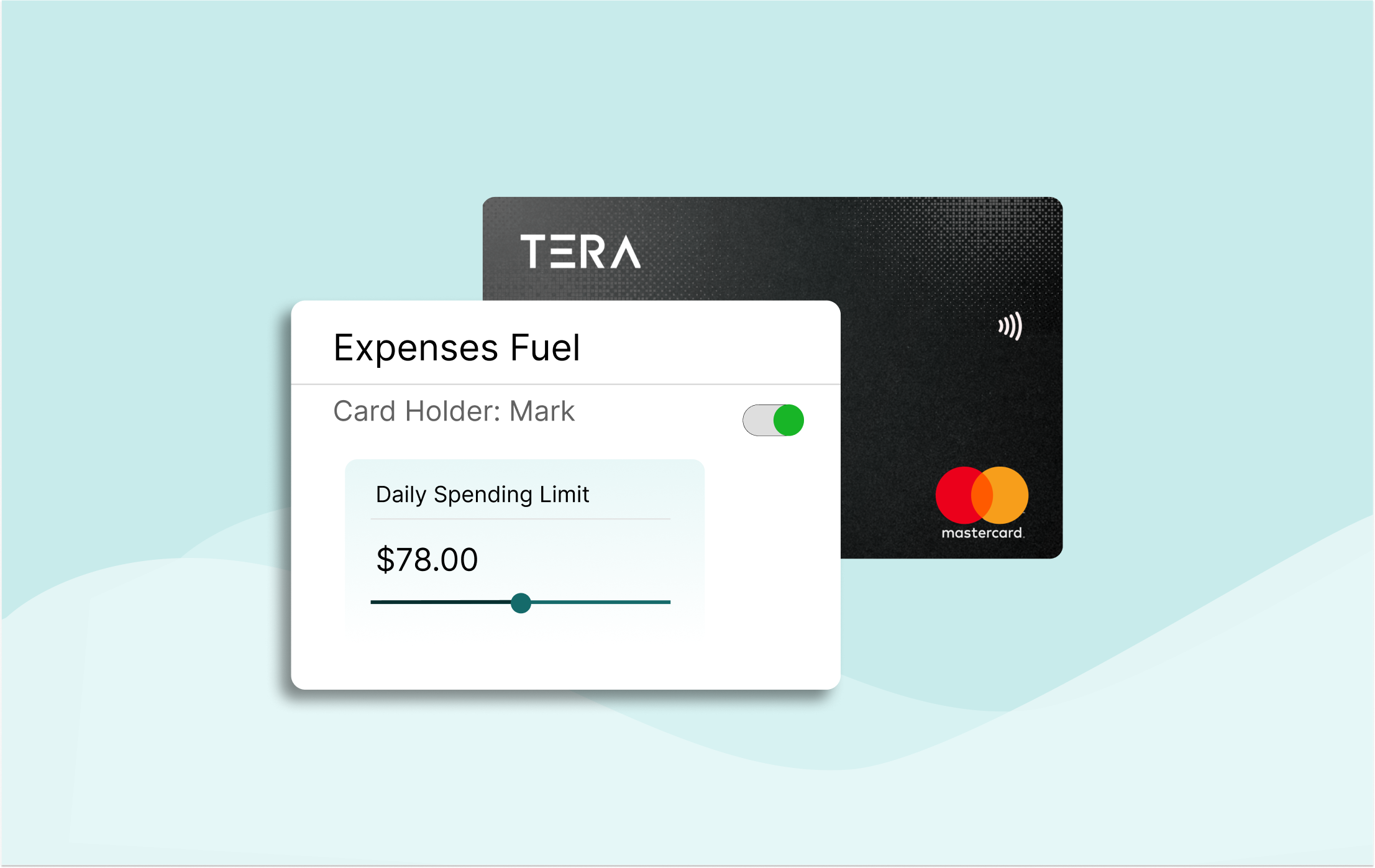
- Governance. Configurable policy limits, role-based access, kill switches, and continuous audit trails on every agent action.
- Dual-jurisdiction operation. Native support for US card programmes and Indian corporate UPI wallets, GST cycles, and Ind AS-compliant journal entries.
- Redeployment-ready outcomes. Quantified labor recovery that supports the CFO's narrative to the board on cost redeployment rather than reduction.
- Implementation pace. Mid-market deployments typically reach Stage 4 within four to six months — fast enough to match the 2026 mandate's timeline.
For CFOs ready to make the architectural decision, the practical next step is a working session on which agent to deploy first, what the 90-day path to continuous close looks like, and how the redeployment narrative builds for the board. Try a demo to see the platform mid-market CFOs are using to deliver the 2026 mandate.
Frequently asked questions
What is the CFO's 2026 mandate?
The 2026 mandate is to deliver decision velocity, spend visibility as a competitive capability, and capital redeployment rather than reduction. Boards and CEOs are increasingly measuring CFOs against these three outcomes rather than against close accuracy and compliance alone.
How is the CFO role changing because of agentic AI?
The CFO is shifting from steward of finance operations to architect of an autonomous finance function. Routine transactional work moves to AI agents; the CFO's role becomes designing the operating model, governing the agents, and redeploying the labor reclaimed.
What are the seven decisions every CFO needs to make in 2026?
Which work to delegate to agents, where to keep humans on the loop, how to govern AI in regulated contexts, how to redeploy reclaimed labor, how to upskill the team, which platform to build on, and how to communicate the change to the board, the CEO, and the team.
How fast can a mid-market CFO move from proactive to autonomous finance?
Typically six to twelve months on an agentic platform, sequenced across AP, expense and policy, then analytics. Mid-market teams routinely reach Stage 4 within four to six months on the first three agents.
What does the Indian CFO mandate look like specifically?
The same three measures apply — decision velocity, spend visibility, capital redeployment — with India-specific operating requirements: corporate UPI wallets rather than card rails, GST cycle reconciliation, Ind AS-compliant journal entries, and the statutory audit cycle. APAC CFOs are planning the steepest agentic-AI adoption curve of any region.
What is the biggest mistake CFOs make on this transition?
Treating it as a technology project rather than an operating-model decision. CFOs who deploy agents without redesigning roles, governance, and the redeployment narrative tend to deliver the savings but miss the strategic outcome the board is actually measuring.
Case study — Spinny
80% reduction in manual reimbursements, finance team redeployed to analytical work
Spinny's finance leadership had a typical mid-market transformation choice — invest in another cycle of dashboard tooling or move directly to agentic execution. The leadership chose the architectural path: deploy autonomous agents on the routine work, redesign the finance team's day around exception handling and business partnering.
- TERA's Expense Agent absorbed reimbursement processing at submission, with humans only on exceptions
- TERA's Policy Agent enforced spend rules pre-submission, eliminating month-end policy adjudication
- Approval routing collapsed from days to minutes across the employee base
- Finance team capacity redeployed from claim processing to FP&A and business support
[Client quote from Spinny finance leadership — to be inserted.]
About TERA
TERA is the AI-native spend intelligence and finance automation platform built for the mid-market. Through agentic AI, TERA executes the work that finance teams have historically managed by hand — expense processing, accounts payable, policy enforcement, and spend analytics — moving organisations from reactive finance, through proactive control, to fully autonomous operations.
Trusted by growing companies across healthcare, manufacturing, e-commerce, financial services, and logistics, TERA is the command centre for finance teams that want to spend less time on the work and more time on the decisions. Learn more at tera.cloud.
Written by [Author name], [Title at TERA]. Reviewed by [Reviewer name, CPA / CA / former CFO]. TERA is committed to publishing finance content that informs procurement, accounting, and operating decisions for mid-market CFOs. We adhere to strict editorial standards on accuracy, attribution, and independence.