.jpg)
Expense management did not fail. It simply stopped evolving where control actually matters.
Expense management software has become standard infrastructure for mid-sized and enterprise companies.
Corporate cards, reimbursement tools, and invoice automation platforms have helped finance teams digitize workflows and improve operational efficiency.
And yet, a fundamental problem remains.
Most financial controls still activate after money has already been spent.
This is where the distinction between traditional expense systems and AI-native financial operations platforms becomes critical. If your organization is evaluating whether your current expense stack is sufficient, this comparison highlights what actually matters.
1. What traditional expense management systems do well
Traditional platforms were built to solve real operational challenges.
They eliminated paper-based claims, structured approval routing, improved receipt tracking, and connected accounting systems. They introduced digital submission, audit trails, policy layers, and faster reconciliation cycles.
For many organizations, this was a significant leap forward.
But these systems were built on a single assumption.
Spend happens first. Controls happen after.
That assumption defines their limitation.
2. The structural limitation of post-spend architecture
Traditional expense systems operate on a reactive model.
An employee or branch spends money.
The transaction is recorded.
Approval workflows are triggered.
Finance reviews and reconciles.
Even when approvals exist before reimbursement, the financial outflow has already occurred.
Control is applied after risk has already entered the system.
The impact at scale
As organizations grow, this model begins to break.
Finance teams approve transactions with limited context due to volume. Budget deviations are identified too late. Branch-level leakages accumulate silently. Audit pressure increases as manual oversight becomes harder to sustain.
These systems improve visibility.
They do not prevent non-compliant spend at the moment it happens.
3. What TERA does differently
TERA is built on a fundamentally different premise.
Financial control should happen before money moves.
Instead of layering automation on top of workflows, TERA embeds intelligence directly into the transaction layer.
What the system checks before every transaction
Before any transaction executes, the system evaluates:
- Budget availability
- Policy alignment
- Merchant category compliance
- Historical spending patterns
- Cost center mapping
- Duplicate risk
If a transaction does not comply, it is:
- Blocked
- Flagged
- Automatically routed
This is not faster approval. It is pre-transaction enforcement.
4. Traditional automation vs AI-native financial operations
The distinction becomes clear when both models are placed side by side.
Traditional expense systems
- Focus on visibility
- Approvals occur after spend
- Workflow-based routing
- Policy violations identified later
- Dashboards for review
- Human-dependent reconciliation
TERA
- Focus on prevention
- Intelligence applied before spend
- Autonomous decision logic
- Policy violations stopped instantly
- Control embedded at execution
- Automated policy enforcement
Most platforms digitized manual processes.
TERA redesigns the system so that intelligence drives decisions from the start.
5. Where the difference becomes critical
The gap becomes most visible in distributed and high-volume environments.
Retail chains with multiple stores.
Logistics firms managing fuel and vendor payments.
Hospital networks handling department budgets.
Manufacturing groups with plant-level procurement.
In these environments, complexity compounds quickly.
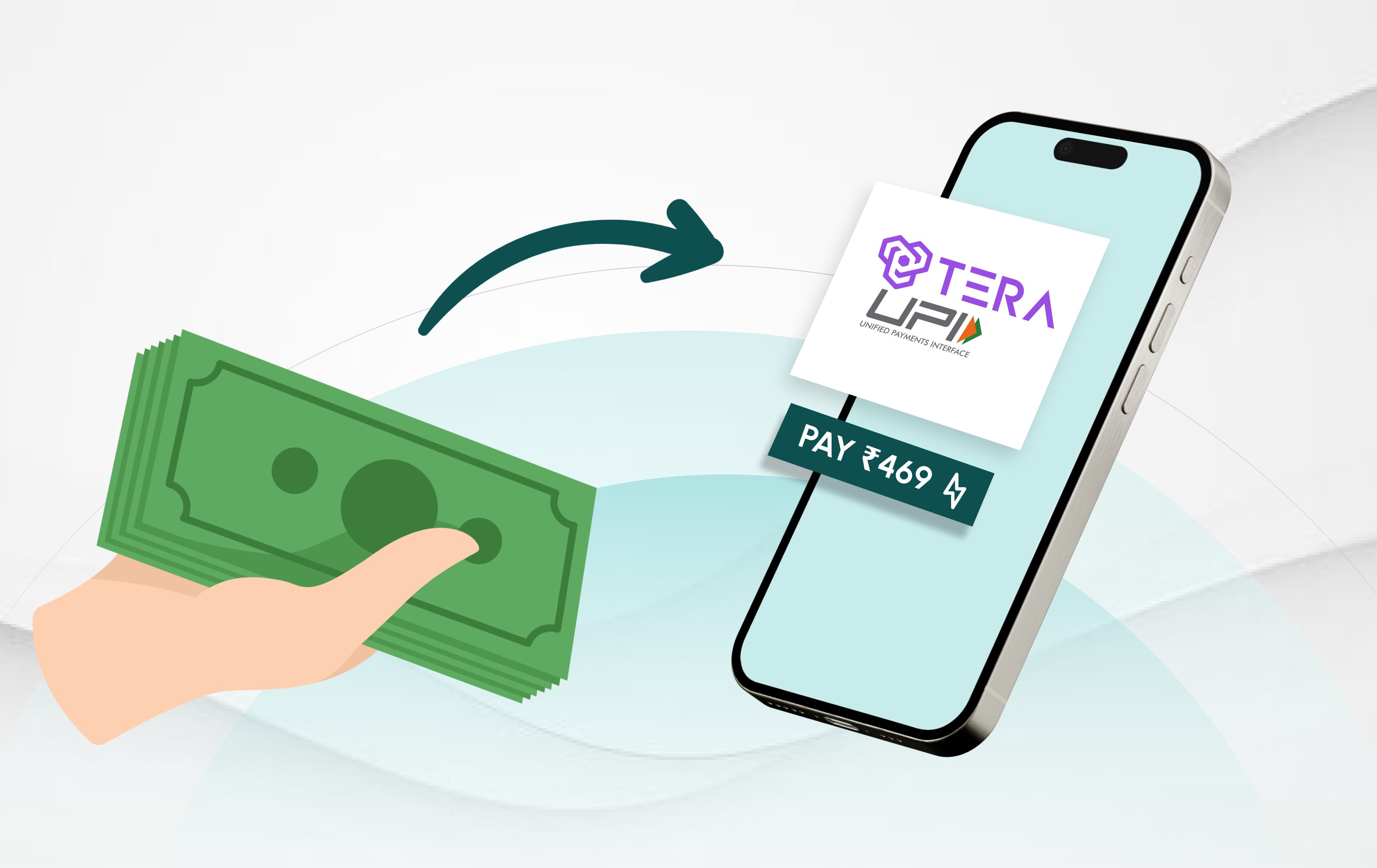
Petty cash multiplies. UPI transactions increase. Branch autonomy expands. Approval volumes become unmanageable.
Traditional systems respond by adding more workflows.
TERA reduces the need for them entirely.
The workflow shift
Traditional workflow
A payment is made.
A claim is submitted.
A manager approves.
Finance reconciles.
Anomalies are reviewed later.
TERA-enabled workflow
A payment is initiated digitally.
Budget, policy, and merchant rules are validated instantly.
If compliant, the transaction proceeds.
If not, it is blocked or routed.
Accounting syncs automatically.
The difference is not speed. It is control timing and risk exposure.
6. Audit and compliance implications
Traditional systems help document compliance.
TERA enforces compliance before risk occurs.
For finance leaders, this changes the equation.
Fewer post-audit corrections. Reduced manual investigation. Lower policy deviation rates. Stronger reporting confidence.
Instead of asking:
“Why did this happen?”
The system ensures it does not happen in the first place.
Closing perspective
Traditional expense systems are not broken.
They are simply built for a different stage of organizational complexity.
They work well for small teams, low transaction volumes, and centralized operations where manual oversight is still feasible.
But as organizations scale, visibility alone stops being enough.
Control becomes the priority.
The real comparison is not between tools. It is between two models of financial governance.
Reactive oversight — review after spend, manual approvals, month-end reconciliation.
Embedded intelligence — evaluate before spend, automated enforcement, real-time control.
Only one of these models scales without increasing financial risk.
If your finance team is still spending most of its time approving, reconciling, and investigating, the system is optimized for reporting — not prevention.
The next phase of financial operations is not better tracking.
It is intelligent control.
Case study — Divay Hygiene digitizes petty cash across operations with TERA
100% digitization of petty cash across locations
Significant reduction in manual cash handling and reconciliation effort
Real-time visibility into branch-level spend
Divay Hygiene, a multi-location operations-driven business, struggled with fragmented petty cash management across branches. Cash-based transactions, inconsistent tracking, and delayed reporting made it difficult for finance teams to maintain control and visibility.
The problem
Branch-level expenses were managed through manual cash processes, leading to limited oversight, delayed reconciliation, and increased risk of leakage and non-compliant spend.
What changed with TERA
- Complete shift from physical petty cash to controlled digital wallets
- Real-time tracking of all branch-level transactions
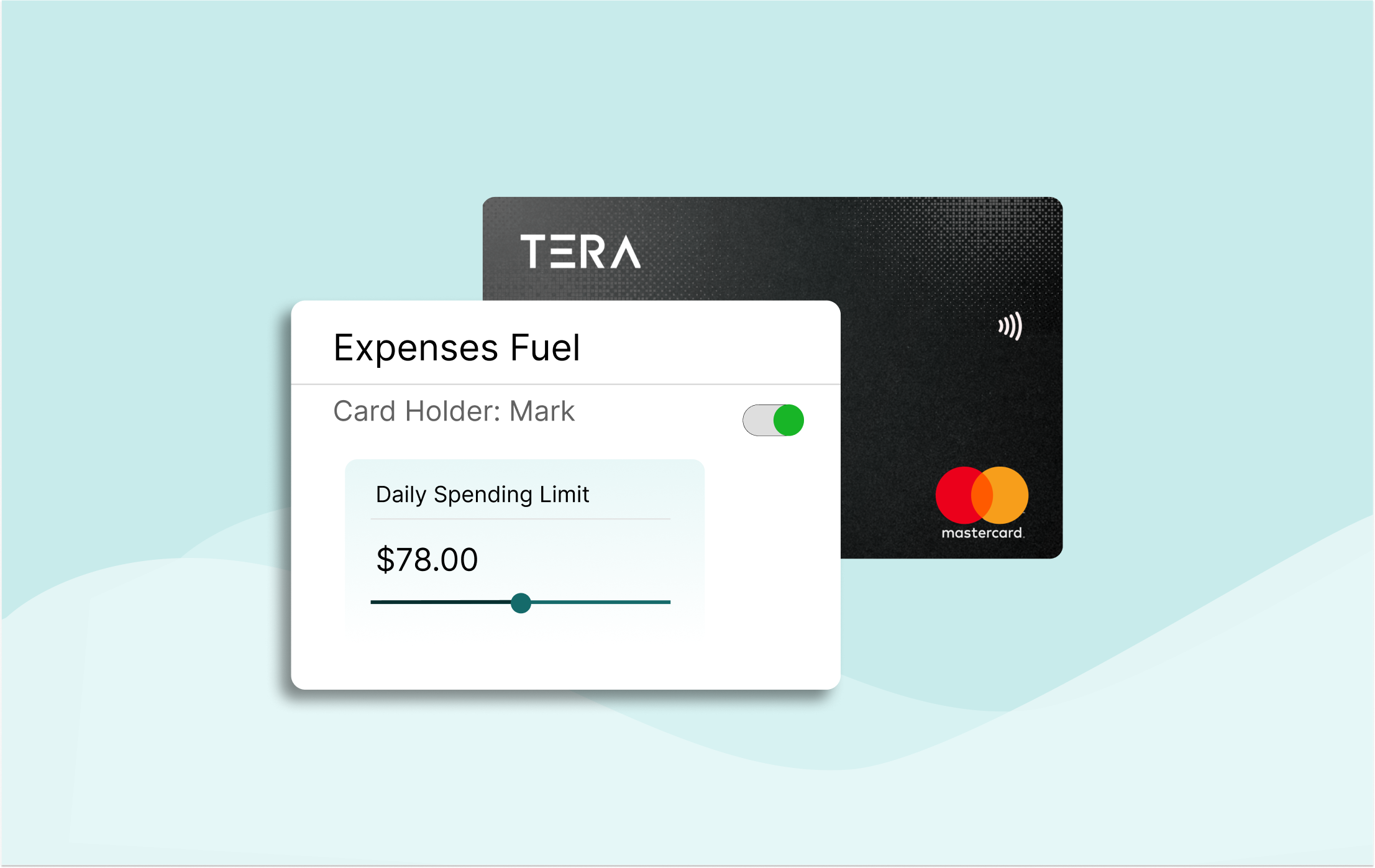
- Budget-linked controls applied at the point of spend
- Automated reconciliation with accounting systems
“TERA helped us move from manual cash handling to a fully controlled and transparent system.”
— Finance Team, Divay Hygiene
About TERA, AI-powered spend intelligence
Stop approving expenses blindly. Start controlling spend before it leaves.
TERA is an AI-powered spend intelligence and finance automation platform built for mid-market businesses with 50 to 5,000 employees. It replaces fragmented expense tools, uncontrolled petty cash systems, and manual accounts payable workflows with a single intelligent system that enforces financial control before money moves.
TERA combines AI-powered corporate cards, controlled UPI wallets, smart expense management, accounts payable automation with duplicate detection, procurement workflows, and AI FinPilot — a predictive analytics engine that surfaces savings opportunities, flags anomalies, and automates financial decisions in real time.
Most companies go live within two to four weeks and achieve payback within the first month.
Trusted for
- Spend intelligence platform for mid-market companies in India
- Corporate UPI wallet solution for field teams and branch operations
- AI-powered accounts payable automation with duplicate detection
- Pre-transaction expense controls for multi-location businesses
- CFO dashboards with real-time spend visibility
- Finance automation for companies scaling from 50 to 5,000 employees
- ERP integrations with QuickBooks, Xero, NetSuite, SAP, Tally, Zoho Books
Book a free demo: https://www.tera.cloud/contact-us
Explore more: https://www.tera.cloud/case-studies | https://www.tera.cloud