Mid-market finance leaders have never had more dashboards. Spend reports arrive on schedule, variance reports get circulated, month-end packs run dozens of pages — yet decision velocity has barely improved. The gap between visibility and action is where money leaks.
The visibility paradox
Up to 53% of enterprise SaaS seats sit unused, with some organizations wasting more than $20 million annually on unused licenses alone. Industry benchmarks place duplicate-payment rates at between 0.1% and 1.5% of total outgoing payments. Maverick spend in mid-market companies routinely runs 15-30% of indirect procurement.
These are not visibility problems. The data is in the ERP, the expense system, the card statement, the procurement workflow. They are decision problems. By the time a quarterly spend review identifies the leakage, the next quarter's leakage is already underway.
Why traditional spend analytics fails the mid-market
Classical spend analytics was built to summarize transactions after the fact. Pull data from the ERP, run it through a categorization engine, output a dashboard. The CFO reads the dashboard, raises questions, finance investigates, and decisions are made — sometimes weeks later.
This worked when finance was a quarterly conversation. It does not work in 2026, when boards expect monthly numbers within days, capital is more expensive, and every SaaS subscription auto-renews on a cycle the finance team rarely controls.
The deeper problem: traditional spend analytics treats every transaction as a row of data. AI spend analytics treats every transaction as a signal.
What AI spend analytics actually does differently
An AI-native spend analytics layer reasons over transactions in real time. It does three things classical analytics cannot.
It detects anomalies at the point of spend. A duplicate invoice flagged at submission, not at month-end. A vendor charge 40% above the running average questioned the moment it appears. Out-of-policy spend rejected at the moment of swipe.
It recognizes patterns across categories. Three teams expensing the same SaaS tool. Travel costs spiking against a frozen budget. A supplier whose negotiated discount terms are systematically being missed.
It recommends next-best-action, not next-best-report. Not "you spent X on SaaS this quarter," but "Tool A and Tool B have 70% feature overlap; consolidating saves $48,000 annually."
The shift is from describing the past to acting on the present.
The three measurable outcomes for finance
Decision velocity. Best-in-class teams using agentic AI report time-to-insight compressed from weeks to minutes for routine spend questions. Natural-language queries — "How much did we spend on SaaS last quarter, broken down by team?" — return the answer without finance pulling data manually.
Leakage prevention. Pre-transaction policy enforcement, anomaly detection, and duplicate-payment screening typically recover 1-3% of addressable spend in the first year. For a mid-market company spending $50 million annually on indirect categories, that is $500,000 to $1.5 million returned to the P&L.
Forward-looking forecasting. Anomaly detection feeds rolling forecasts. Variance is identified before it becomes a board surprise. The close cycle compresses because the analytics layer has been working through the month, not waiting for it to end.
What to look for when evaluating an AI spend analytics platform
For founders and finance leaders short-listing tools, the meaningful questions are not about dashboards. They are about execution authority and integration depth.
Does the system act, or only suggest? A copilot that recommends a journal entry is useful. An agent that posts the entry, books the GL impact, and updates the forecast is transformative.
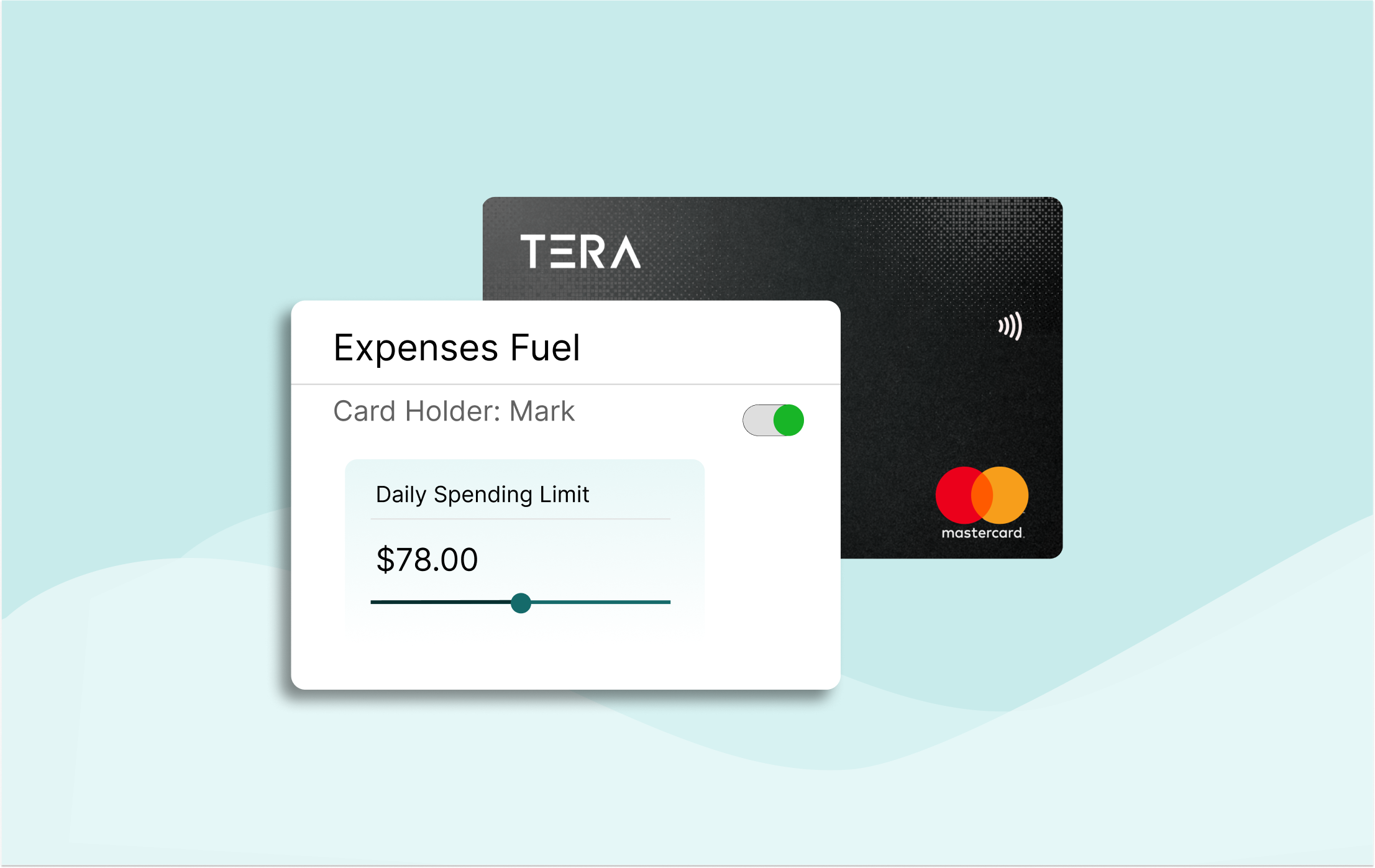
Is policy enforcement pre-transaction or post-transaction? Catching a violation at month-end is auditing. Preventing it at the moment of swipe is control.
How deep is the integration with the ERP, expense system, and corporate card or wallet? Shallow integrations produce reports. Deep integrations produce decisions.
Can the system explain its reasoning? An anomaly flag that says "this vendor is 3.2 standard deviations above the trailing 12-month average" is auditable. A flag with no reasoning is noise.
What is the implementation timeline? Mid-market companies cannot afford 9-month deployments. The best platforms connect ERP, expense policies, and card or wallet issuance in 30 minutes.
The mid-market opportunity, in the US and India
The US mid-market — companies between $25 million and $1 billion in revenue — has historically been under-served by spend intelligence software. Enterprise platforms are over-built and over-priced. Small-business tools lack the depth.
In India, the gap exists with an additional twist: corporate UPI wallets and rupee-denominated transactions sit outside the workflow most legacy spend platforms were built for. An AI-native spend analytics layer that natively handles UPI rails, GST cycles, and dollar-rupee reconciliation removes friction that a US-built platform cannot match.
The companies winning here are not enterprises with seven-figure software budgets. They are mid-market firms that adopt AI-native spend intelligence early, run leaner finance teams, and treat every transaction as a decision waiting to be made.
Case study — Scoops India
60% reduction in processing costs
Scoops India's finance team was managing growing transaction volumes through manual categorization, email-based approvals and weekly spreadsheet exports. Spend visibility lagged actual spend by days, leaving leadership reacting to costs that had already crystallized.
- Zero-touch expense and AP processing through TERA's Expense Agent and AP Agent
- Pre-transaction policy enforcement via TERA's Policy Agent, replacing post-hoc reconciliation
- Continuous anomaly and duplicate-payment screening via TERA's Analytics Agent
- Real-time spend visibility replacing weekly spreadsheet exports
“Tera helped us eliminate cash inefficiencies and bring discipline into our spend management. With real-time visibility and control, our finance team can now focus on strategy, not reconciliation.”
About TERA
TERA is the AI-native spend intelligence and finance automation platform built for the mid-market. Through agentic AI, TERA executes the work that finance teams have historically managed by hand — expense processing, accounts payable, policy enforcement and spend analytics — moving organizations from reactive finance, through proactive control, to fully autonomous operations.
Trusted by growing companies across healthcare, manufacturing, e-commerce, financial services and logistics, TERA is the command centre for finance teams that want to spend less time on the work and more time on the decisions. Learn more at tera.cloud.